Download PDF Switched On: A Memoir of Brain Change and Emotional Awakening, by John Elder Robison
If you still require more books Switched On: A Memoir Of Brain Change And Emotional Awakening, By John Elder Robison as referrals, going to look the title and theme in this website is offered. You will discover even more great deals books Switched On: A Memoir Of Brain Change And Emotional Awakening, By John Elder Robison in numerous self-controls. You could likewise as soon as possible to review the book that is currently downloaded and install. Open it and also conserve Switched On: A Memoir Of Brain Change And Emotional Awakening, By John Elder Robison in your disk or device. It will certainly relieve you any place you require guide soft documents to review. This Switched On: A Memoir Of Brain Change And Emotional Awakening, By John Elder Robison soft documents to check out can be recommendation for everybody to improve the skill and ability.
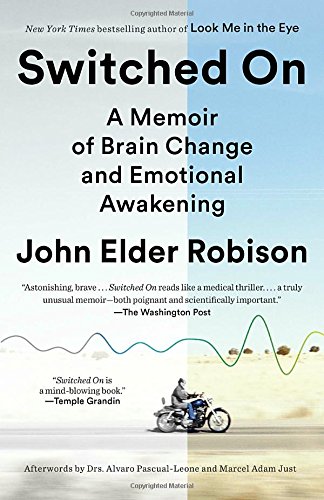
Switched On: A Memoir of Brain Change and Emotional Awakening, by John Elder Robison

Download PDF Switched On: A Memoir of Brain Change and Emotional Awakening, by John Elder Robison
Switched On: A Memoir Of Brain Change And Emotional Awakening, By John Elder Robison. It is the time to enhance as well as freshen your ability, knowledge as well as experience consisted of some enjoyment for you after very long time with monotone points. Working in the office, visiting research, learning from test and also more activities could be finished as well as you need to start brand-new points. If you feel so exhausted, why don't you try new point? A really simple thing? Reviewing Switched On: A Memoir Of Brain Change And Emotional Awakening, By John Elder Robison is just what we provide to you will know. And also guide with the title Switched On: A Memoir Of Brain Change And Emotional Awakening, By John Elder Robison is the referral currently.
It is not secret when linking the writing abilities to reading. Reading Switched On: A Memoir Of Brain Change And Emotional Awakening, By John Elder Robison will certainly make you obtain more sources and sources. It is a way that can enhance just how you neglect and also comprehend the life. By reading this Switched On: A Memoir Of Brain Change And Emotional Awakening, By John Elder Robison, you could more than just what you obtain from other publication Switched On: A Memoir Of Brain Change And Emotional Awakening, By John Elder Robison This is a widely known publication that is published from renowned publisher. Seen type the writer, it can be relied on that this book Switched On: A Memoir Of Brain Change And Emotional Awakening, By John Elder Robison will offer several inspirations, about the life and also experience and everything within.
You may not should be doubt about this Switched On: A Memoir Of Brain Change And Emotional Awakening, By John Elder Robison It is not difficult means to get this book Switched On: A Memoir Of Brain Change And Emotional Awakening, By John Elder Robison You could merely check out the established with the web link that we supply. Below, you can acquire guide Switched On: A Memoir Of Brain Change And Emotional Awakening, By John Elder Robison by on the internet. By downloading Switched On: A Memoir Of Brain Change And Emotional Awakening, By John Elder Robison, you can discover the soft file of this publication. This is the local time for you to start reading. Also this is not published book Switched On: A Memoir Of Brain Change And Emotional Awakening, By John Elder Robison; it will precisely offer more benefits. Why? You might not bring the published book Switched On: A Memoir Of Brain Change And Emotional Awakening, By John Elder Robison or only stack the book in your house or the office.
You can carefully add the soft data Switched On: A Memoir Of Brain Change And Emotional Awakening, By John Elder Robison to the gizmo or every computer hardware in your office or residence. It will certainly help you to always continue reading Switched On: A Memoir Of Brain Change And Emotional Awakening, By John Elder Robison each time you have downtime. This is why, reading this Switched On: A Memoir Of Brain Change And Emotional Awakening, By John Elder Robison does not give you issues. It will give you crucial resources for you which intend to begin creating, writing about the comparable book Switched On: A Memoir Of Brain Change And Emotional Awakening, By John Elder Robison are different book field.
An extraordinary memoir about the cutting-edge brain therapy that dramatically changed the life and mind of John Elder Robison, the New York Times bestselling author of Look Me in the Eye
NAMED ONE OF THE BEST BOOKS OF THE YEAR BY�THE WASHINGTON POST
Imagine spending the first forty years of your life in darkness, blind to the emotions and social signals of other people. Then imagine that someone suddenly switches the lights on.
It has long been assumed that people living with autism are born with the diminished ability to read the emotions of others, even as they feel emotion deeply. But what if we’ve been wrong all this time? What if that “missing” emotional insight was there all along, locked away and inaccessible in the mind?
In 2007 John Elder Robison wrote the international bestseller Look Me in the Eye, a memoir about growing up with Asperger’s syndrome. Amid the blaze of publicity that followed, he received a unique invitation: Would John like to take part in a study led by one of the world’s foremost neuroscientists, who would use an experimental new brain therapy known as TMS, or transcranial magnetic stimulation, in an effort to understand and then address the issues at the heart of autism? Switched On is the extraordinary story of what happened next.
Having spent forty years as a social outcast, misreading others’ emotions or missing them completely, John is suddenly able to sense a powerful range of feelings in other people. However, this newfound insight brings unforeseen problems and serious questions. As the emotional ground shifts beneath his feet, John struggles with the very real possibility that choosing to diminish his disability might also mean sacrificing his unique gifts and even some of his closest relationships. Switched On is a real-life Flowers for Algernon, a fascinating and intimate window into what it means to be neurologically different, and what happens when the world as you know it is upended overnight.
Praise for Switched On
“An eye-opening book with a radical message . . . The transformations [Robison] undergoes throughout the book are astonishing—as foreign and overwhelming as if he woke up one morning with the visual range of a bee or the auditory prowess of a bat.”—The New York Times
“Astonishing, brave . . .�reads like a medical thriller and keeps you wondering what will happen next . . . [Robison] takes readers for a ride through the thorny thickets of neuroscience and leaves us wanting more.”—The Washington Post
“Fascinating for its insights into Asperger’s and research, this engrossing record will make readers reexamine their preconceptions about this syndrome and the future of brain manipulation.”—Booklist
“Like books by Andrew Solomon and Oliver Sacks, Switched On offers an opportunity to consider mental processes through a combination of powerful narrative and informative medical context.”—BookPage
“A mind-blowing book that will force you to ask deep questions about what is important in life. Would normalizing the brains of those who think differently reduce their motivation for great achievement?”—Temple Grandin, author of The Autistic Brain
“At the heart of Switched On are fundamental questions of who we are, of where our identity resides, of difference and disability and free will, which are brought into sharp focus by Robison’s lived experience.”—Graeme Simsion, author of The Rosie Effect
- Sales Rank: #58695 in Books
- Published on: 2017-02-07
- Released on: 2017-02-07
- Original language: English
- Dimensions: 8.00" h x .71" w x 5.20" l,
- Binding: Paperback
- 320 pages
Review
“Switched On is an eye-opening book with a radical message. . . . The transformations [John Elder Robison] undergoes throughout the book are astonishing—as foreign and overwhelming as if he woke up one morning with the visual range of a bee or the auditory prowess of a bat.”—The New York Times
�
“Astonishing, brave . . . Switched On reads like a medical thriller and keeps you wondering what will happen next. . . . [Robison] takes readers for a ride through the thorny thickets of neuroscience and leaves us wanting more. He is deft at explaining difficult concepts and doesn’t shy from asking hard questions. This is a truly unusual memoir—both poignant and scientifically important.”—The Washington Post
�
“Fascinating for its insights into Asperger’s and research, this engrossing record will make readers reexamine their preconceptions about this syndrome and the future of brain manipulation.”—Booklist
“Like books by Andrew Solomon and Oliver Sacks, Switched On offers an opportunity to consider mental processes through a combination of powerful narrative and informative medical context. Readers can put their hands, for a moment, on the mystery that is the brain.”—BookPage
“A fascinating companion to the previous memoirs by this masterful storyteller.”—Kirkus Reviews
�
“Switched On is a mind-blowing book that will force you to ask deep questions about what is important in life. Would normalizing the brains of those who think differently reduce their motivation for great achievement?”—Temple Grandin, author of The Autistic Brain
�
“John Elder Robison is an extraordinary guide, carefully elucidating the cutting-edge science behind this revolutionary new brain therapy, TMS, alongside the compelling story of the impact it has on his relationships, his thinking and emotions, and indeed his very identity. At the heart of Switched On are fundamental questions of who we are, of where our identity resides, of difference and disability and free will, which are brought into sharp focus by Robison’s lived experience.”—Graeme Simsion, author of The Rosie Effect
�
“In this fascinating book John Elder Robison raises deep questions: What does TMS do to the brain? Will it permanently change his experience of music, his emotions, and his ability to read faces? And if autism involves disability as well as talent, if we alter the different wiring in an autistic brain, is this a good thing? Robison’s honest, brilliant, and very personal account helps us understand the perspective of someone living with autism.”—Simon Baron-Cohen, professor, Autism Research Centre, Cambridge University
“In Switched On, John Robison has written a remarkable, engaging, and moving story. . . . His astonishing story of transformation, of overcoming disability and deriving benefit from an experimental intervention that completely changed his life, is rife with inspiring lessons for each of us. It is a strikingly moving personal narrative about the nature of emotion, and about the opportunities afforded us when we seek to understand neurological difference.”—Alvaro Pascual-Leone, MD, PhD, from the foreword
From the Hardcover edition.
About the Author
John Elder Robison is a world-recognized authority on life with autism, and the New York Times bestselling author of Look Me in the Eye, Be Different, and Raising Cubby. Robison is the neurodiversity scholar in residence at the College of William & Mary, and he serves on the Interagency Autism Coordinating Committee, which produces the U.S. government’s strategic plan for autism spectrum disorder research. A machine aficionado and avid photographer, Robison lives with his family in Amherst, Massachusetts.
From the Hardcover edition.
Excerpt. � Reprinted by permission. All rights reserved.
Prologue
There I was, doing seventy--five miles an hour in the left lane on the Massachusetts Turnpike. Suddenly, without any warning, I found myself transported back to a Boston nightclub, circa 1984. It was eight p.m. on April 15, 2008, when everything changed as I switched on my car stereo.
I was fifty years old, half deaf from hanging out with rock and roll bands in my youth, and tired from a long day working on cars. On top of that, I’d just left Boston’s Beth Israel Hospital, where a team of Harvard neuroscientists had run an experiment on me, using high--powered magnetic fields in an attempt to rewire my brain and change my emotional intelligence. I’ve always been weak in that area because I have autism. Some autistic people have trouble talking or understanding language. Others—like me—generally talk fine and listen some of the time, but we often miss the unspoken cues—-body language, tone of voice, and subtleties of expression—-that make up such a big part of human conversation. I’ve always had a hard time with that. Luckily, my social disability is offset somewhat by my technical skills. But many of the gifts that help me make a living and take care of myself today also left me feeling lonely and broken as a kid. Some vestige of that hurt has remained in me, and that was why I had agreed to join the scientists on what several of my friends had called a crazy quest.
The idea of fixing myself with a fancy new treatment had sounded great in theory, but from what I had seen so far, it hadn’t worked. The scientists had proposed using electromagnets to rearrange connections in my head. It had seemed like science fiction, and maybe that’s all it ever would be. As I got into my car that evening after four hours at the hospital, I was more exhausted and annoyed than when I’d arrived. But otherwise, as far as I could tell, nothing had changed.
The drive to Boston had taken two hours and now I was facing another two hours to get home. What was I doing there? I asked myself. But I knew the answer—-I had volunteered for this research study because the scientists had issued a call for autistic adults, and I wanted to “make myself better” in some ill--defined but powerfully felt way.
Those thoughts and a thousand others were all running through my head when I plugged in my iPod and music filled the car. I’d done that same thing a thousand times before and heard nothing more than songs on a car stereo. I hadn’t seen anything at all—-just the road ahead. This time the result was strikingly different. All of a sudden, I wasn’t in my car. I wasn’t even in my body. All my senses had gone back in time, and I stood backstage listening to the Tavares brothers singing soul music in a dark, smoky club.
Years ago I’d stood by those stages as the sound engineer, whose job was to make sure the machinery of the show kept running. These days I hung around the stage as a part--time photographer, following performers through my camera lens in the hope of catching that magic moment. This was something totally different. When I’d engineered rock and roll shows all I saw or heard were the little cues that told me everything was okay, or not. Now when I work as a photographer I concentrate so deeply on my subjects that I don’t even hear the sounds of the show. That night in the car, the recorded music captured me and drew me into a world of a long--ago performance in a way I’d never experienced before.
The transition was instantaneous. One moment I was navigating traffic in my Range Rover and the next I was watching five singers in a nightclub. Floodlights hung from the ceiling, illuminating the stage, and I stood just outside the lit area. To my left, on the stage, I saw the Tavares brothers in sport coats and bow ties, with a backup band on the side. A flute player stood in the background, whispering his contributions to the melody every few measures. Tavares is known to the world for singing “More Than a Woman” from the Saturday Night Fever soundtrack, but they had a long history in New England before that and a much larger repertoire of songs. Thirty years earlier I’d been a part of that world, working as a sound engineer and special effects designer. Many of the big Boston venues used my sound and lighting equipment, and I’d stood beside countless stages and watched more performances than I could remember. Was I reliving one of those now, or was this a figment of my imagination? I could not tell then, and I still don’t know today. All I can say is that the experience felt incredibly real. I could almost smell the cigarette smoke on my clothes. And through it all, some separate part of my mind kept driving the car, though I only know that because I didn’t crash.
Meanwhile, the sound of their voices was so clear that I let my mind run free. The musicians and their gear were right in front of me onstage. Looking into the wings I saw amplifiers and road cases stacked in the darkness. Scanning the club I saw the keyboard player, with his rack of instruments. One of the singers onstage walked toward me, and I heard the swish of the cable as he carried the microphone in his hand.
My vision was crystal clear, my head was full of sound, and I felt totally alive. The sterile digitized songs on my iPod had come to life and the feeling was so magnificently overwhelming that I began to cry. Not because I was happy or sad, but because it was all so intense.
I turned up the volume and sank deeper into the melody. The brothers kept singing, my car kept driving, and tears ran down my face. I felt the beauty of the sound wash over me, and every note was brilliant, new, and alive. This was similar to the way I heard music thirty years earlier, when I had spent every waking moment listening to performances, watching audio signals on my oscilloscope screen, or visualizing the sounds of instruments in my mind. Back then, “listening” was such a detailed experience that I’d recognize individual instruments and their positions on the stage. I’d hear the voices of each background singer, distinct, as he or she stepped up for a chorus. But now the experience was richer and deeper, with an added layer of feeling.
Suddenly I had an insight: Perhaps I was hearing music pure, and true, without the distorting lens of autism. Perhaps others heard that emotion all along, and now I could too. Maybe that was why I had cried—-because I could feel the music, something that autistic people do not often experience in response to things we see and hear. I’d always been able to tell when music was happy or sad, but that night the Tavares brothers’ music had hit me with a power that was new and unexpected.
A few hours earlier, back at the hospital, I had listened to two people shouting in anger as they passed in the hall. He’s mad, I said to myself, without a trace of emotion attached to the observation. I was an accurate, logical observer. Now, as I listened to Tavares sing, tears ran down my face as I felt the emotions rise up from the lyrics of “She’s Gone,” “Words and Music,” and “A Penny for Your Thoughts.”
As many times as I’d heard those melodies sung, I’d never felt them the way I did now. Earlier that day, I would have understood the logical meaning of the words but nothing more.
At that moment, I got it. A song like “She’s Gone” wasn’t just words and melody, delivered to the audience with artistic precision. It was an expression of love, written and sung for a real person. I wondered who she was and what had become of her.
Later that night I sent a message to the scientist who was heading the effort. “That’s some powerful mojo you have in there,” I told him. And we were just beginning.
Switched On
An Electrifying Proposal
My adventure had started rather inauspiciously a few months earlier. I was standing by a table covered with cookies, at the entrance to the auditorium at the Elms College library in Chicopee, Massachusetts. The cookies were just standard school cafeteria fare, but someone had to eat them, so there I was.
I’d been invited to Elms to talk to students, faculty, and anyone else who might wander in on a cold January night. Elms had billed the evening’s program as an “autism workshop,” and I was its ostensible leader. That in itself was an extraordinary thing—-me leading a college workshop. Until quite recently, the only workshop I’d ever run was the one at Robison Service, where we restored Mercedes, Jaguars, and Land Rovers. I wasn’t a college professor—-I hadn’t even gone to college. I’d begun as a self--taught engineer who created sound and light effects for rock and roll shows. Twenty years ago I’d left that world behind and started a small business. Now I was a car mechanic with a side interest in freelance photography. However, I’d just written a book about living with Asperger’s syndrome. (That was what clinicians called the type of autism I’d been diagnosed with. Today they call all forms of autism the “autism spectrum.”) I was already getting invitations to come talk about it in some pretty surprising places.
I’d grown up knowing I was different but having no idea why. The less obvious forms of autism—like Asperger’s syndrome—were not widely recognized until the 1990s, and I wasn’t diagnosed until age forty, in 1997. My discovery of how and why I was different was so empowering and liberating that I felt compelled to share the story with the world. The guys at the car shop thought I was crazy to take time off to write a book, but my brother, Augusten Burroughs, had written his own story, Running with Scissors, a few years before and I’d felt sure I could do it. Now my book was a reality, and its publication had connected me to more people than I’d ever imagined, all fascinated by autism.
First were the adults I’d met through my local autism society, a part
of the Asperger’s Association of New England (now called the Asperger/
Autism Network, or AANE). They’d been great—-a welcoming and supportive community that gathered twice a month to talk about the tribulations of everyday life. I was surprised by the extent to which autism tied us together, different as we seemed as individuals. And wherever I spoke I also met parents, many of whom seemed to take encouragement from the fact that I’d matured into an independent and self--supporting adult. Their reaction to my success made me think I’d dodged a bullet, living in ignorance of my diagnosis for so long. When I was growing up, I never for a moment doubted that I would be able to make a living. What other choice was there? Starvation? Yet many of the parents I was meeting seemed to doubt that their kids could do much more than get dressed in the morning and play videogames.
Their low level of expectation was shocking to me, and I began to wonder if it was an unintended downside to the new diagnostic awareness. Maybe today’s autistic kids were like wise and wily pets who had trained their parents to feed them, house them, and provide entertainment and healthcare for a lifetime, all for free. When I offered this insight to a few of the mothers they did not find it amusing or enlightening.
I had done some speaking about autism before Look Me in the Eye was published—-for schoolkids and even in jails—-and I initially thought of the book as an extension of my in--person storytelling. After it was published I expected to reach a wider audience, but I never imagined the sort of response I encountered. I’d never gotten so many emails, calls, and messages, all from people with a stake in autism. I’d imagined creating a book as a cerebral, literary process, but no one seemed to be interested in the technical or creative aspects of my writing. It was all about autism. Everywhere I went, readers questioned me about the ideas I expressed and the things I believed. One of the first to make contact was Jim Mullen, then the president of Elms College. He’d gotten a prepublication copy, read it, and invited me to tour their campus and their new autism program. Jim introduced me to the faculty and asked if I wanted to get involved. They were developing a graduate program in autism therapy, and I was flattered to think that my ideas might make a useful addition to their curriculum. And I imagined it might be fun to surprise the faculty members who brought their Subarus and Volvos to my car complex for service. I’d always joked with them, saying, “You never know what a car mechanic will do next!”
That was my answer whenever a client of my car company encountered me moonlighting as a photographer on the edge of a concert stage, up on an acrobat’s high wire, or in the circus ring with a lion. With my photographer’s vest, ID lanyard, and three big cameras hanging off my shoulders, I sure looked different from the way I appeared in our service department. And being six foot four, I guess I’m a hard guy to miss. The funny thing was, I was perfectly in my element among performers and musicians, and they would have thought it just as strange to see me in the shop at Robison Service, surrounded by broken Jaguars and BMWs. Now publishing a book had led me to a new place—-one where no one from my past would have expected to find me. The night of the workshop at Elms College, I’d had just four months to adapt to my new role as “autism expert.”
Nowhere in my book had I claimed to be knowledgeable about anything but cars, electronics, and my own life. Nonetheless, readers said my lived autism insights made me an expert on that, and I was doing my best to meet their expectations.
The only worry that would sometimes creep into my mind was that I wasn’t an accredited autism professional. My expertise was limited to my own experience of growing up different. The prospect of giving wrong advice by example worried me a lot, so I resolved to learn as much as I could about autism. I couldn’t change the way people saw me, but I could change my foundation of knowledge, and I set out to do that as quickly as possible.
I never knew who would be in the audience at my talks. Some of the folks who came to hear me speak were established autism clinicians and therapists. I met teachers, counselors, psychologists, psychiatrists, and physicians. They often expressed fascination with my stories, and I wondered how to interpret that. Did they identify with my experiences? Or were they thinking something like, This lab specimen can talk! There was probably a bit of both.
Whenever a professional approached me, I listened very intently because I never knew when I might learn something vital. The problem was distinguishing genuine experts from trolls, opinionated laypeople, and the occasional crank. When Lindsay Oberman walked up to me that night at Elms College, I didn’t know who she was or where she fit into the puzzle. She seemed the right age to be attending the school, and that’s what I first assumed. She looked like a typical grad student—-young, enthusiastic, and conservatively dressed in jeans and a sweater. Some of the people at the Elms event wore fancy jewelry or sported exotic tattoos or piercings, but Lindsay’s only adornment was a handbag and a book.
Despite the simplicity of her appearance, she managed to stand out. Even now, I can’t say what it was about her that made such an impression on me. Maybe someone who reads people better than I do could answer that, but it was enough for me that I sensed she was smart and different.
“I’m a postdoctoral researcher from Beth Israel Hospital,” she said as she introduced herself with a business card that read “Dr. Lindsay Oberman, Ph.D.” “We’re doing some autism studies and I’m hoping you’ll let me leave some flyers about our research. We need adult volunteers for a project we’re starting in the area of improving emotional intelligence for people with autism.”
Now that was a new one.
I pictured the audience for my talk as fish in a pond, and Lindsay on the bank with a fishing pole and a net, scooping the ones she could catch into a bucket and carrying them away to some unknown fate. I wondered what she intended to do with these adult volunteers, imagining psychological tests followed by stew pots for the losers.
That unsettling vision left me unsure how to respond. Was she asking me to endorse her research and encourage people to volunteer? I didn’t even know what her study was about. So I asked her.
She began to describe her interest in autism and her desire to remediate some of its disabling symptoms. “We’re experimenting with a new technique called TMS, which stands for transcranial magnetic stimulation. We use an electromagnetic field to induce signals in the outer layer of the brain. We’re hoping to develop a therapy that helps autistic people read emotion in other people.”
That last line got my attention. I almost said, “That’s exactly my problem,” but I kept my mouth shut. My grandfather had taught me never to show interest in something that was offered for sale. It only makes the price go up. Even though she hadn’t said a word about money yet, for all I knew, she was going to end her presentation with the news that I could sign up—-today only—-for a special introductory price of $1,999.
But she didn’t mention money at all. Instead, she launched into a five--minute explanation of mirror neurons, electromagnets, and pulse energy. I wasn’t sure if Lindsay had read my book or knew about my background as an electrical engineer. What she described sounded very similar to the lasers and sound systems I’d worked with eighteen years earlier. The difference was, our electromagnets were part of loudspeaker arrays that filled arenas with sound, and our pulse lasers scattered pinpoints of light over crowded dance floors or bounced signals off the moon.
She proposed using similar technologies on people, by pulsing electromagnets to fire microscopic shots of energy into the brain. I’d never considered such a possibility, but I was intrigued.
And the mirror neuron thing was fascinating too. I’d recently read up on mirror neurons—-brain cells that cause us to act out what we see or hear. We see our mother smile at us, and our mirror neurons make us smile in response, sort of a monkey see, monkey do effect (literally so, because it was first observed in monkeys).
The idea of stimulating mirror neurons with electricity sounded more than cool to a techno geek like me. I had a brief vision of Frankenstein’s monster with lightning sizzling between his ears, but I understood that this would be something far subtler. Years ago, we’d fired thousands of watts into lasers and loudspeakers, but the brain operated at power levels a million times smaller. Delivering tiny pulses of energy to alter the process of thought sounded like a fascinating challenge. I’d have jumped at the chance to design their equipment if I still worked as an engineer.
Lindsay had captured my attention right away with her talk of medical magnets. Maybe it was the use of familiar technologies in a completely unexpected way, or perhaps it was the hope of unraveling my social disability through applied electrical engineering—-either way I was hooked just as surely as a guy in the funnies who sees a pretty girl and gets hit by a thunderbolt.
Was it possible to use energy to change the brain? It sounded like science fiction. “It’s definitely science fact,” Lindsay assured me. “When TMS adds electromagnetic energy to the neural networks inside your head, it helps them build new connections, and it reinforces the connections we want to strengthen.
“I’ve worked with it in the lab,” she told me, “and I’ve even had it done to me, so I know it’s safe.” Until she said that I hadn’t even stopped to consider whether jolting the brain with energy might be dangerous.
I fired questions at her as fast as I could think them up, and she was eager to answer, tossing out terms like “cerebral cortex” and “brain plasticity.” But when I asked about power levels, polarity, and patterns of electrical waves, I discovered that her knowledge of the physics of TMS was limited. Lindsay was a user of electromagnetic technology, not a maker of it. Her training was in neuroscience as opposed to electronic circuit design. She was quite fluent in the language of the brain, but from my perspective, as a newcomer to neuroscience, hearing which cerebral areas she might stimulate didn’t mean much because I didn’t know one from the other. And Lindsay wasn’t familiar with any of my electronic engineering terms; all she could tell me was that different patterns produced different effects. I asked what the effects were and she mentioned two terms—-“potentiation” and “depression.” When I asked what those terms meant she explained that they referred to energizing or turning down particular areas. “If we depress your speech center, you’ll have a hard time talking,” she offered as a quick illustration.
When I asked her exactly how that happened, she couldn’t answer me. I wasn’t sure if she didn’t know herself or if the answer was unknown to science. Either way, I wanted to learn more.
“My boss can explain how it works better than I can,” she said. She wrote down his name, Dr. Alvaro Pascual--Leone, on the back of her business card and invited me to meet him the following week.
The idea of using pulsed magnets to change the brain was fascinating to me for another reason as well. My family had a history of mental illness, and I’d always hoped for some kind of breakthrough. My mother had experienced semiannual psychotic breaks throughout most of my teen and adult life—-I’d seen her sent to the state hospital and tranquilized into a zombie--like stupor—-until her brain was reconfigured by a stroke when I was thirty--three. Her doctor made a remarkable observation two years later, when she was in a rehab hospital, paralyzed on one side and having lost much of her speech. “The stroke seems to have killed the part of your mom’s brain that made her become psychotic. As hard as this is for all of you, that is an unexpected silver lining.”
To make matters worse, one of her brothers was schizophrenic, and her father suffered all his life from serious depression. Given my family history, I always wondered when the other shoe was going to drop for me. Was there a way to fix the broken things inside our heads while leaving the remainder untouched? Could we alter speech, coordination, or vision while leaving personality intact? Might we even adjust personality?
Lindsay’s description of TMS hinted at an answer. But she didn’t promise any benefit at all, particularly for me. “This is a research study,” she told me. “It’s not a treatment trial. That would come later, if we find something that seems to work.” But even without any guarantees, I was ready to sign up. I’d had a lifetime of feeling I was less than everyone else. After fifty years I’d come to accept my lot in life, but now that I saw a chance to leave second--class citizenship behind I was going to grab it.
Then I had a crazy thought: What if her boss was an engineer? Nothing could be finer! We would solve the problems of autism as fellow engineers and use medical magnets to create autistic supermen! We’d win fame and glory! Alas, my hopes were immediately dashed. “He’s a neuroscientist,” she told me.
When I first started giving talks about autism, I had encountered some unusual theories about my condition. “Don’t you realize that your autism is caused by mercury poisoning?” I was asked more than once. One determined mom insisted that dangerous chelation therapy was the key to a healthy, autism--free life, just as surely as Brother Love’s Traveling Salvation Show offered the road to redemption. Another well--meaning parent professed the wonders of hyperbaric chambers. If chelation didn’t fix me, that surely would. Prior to meeting these parents, I’d never thought of myself as being in need of a cure. The idea that my autism was a disease or a vaccine byproduct had always felt somewhat insulting. I did not know why I was different, but I knew in my bones that I was not the twisted spawn of some pharma--government vaccine conspiracy. Nor was I a different kind of human, escaped from the Alien Containment Unit in Area 51. To my great relief, Lindsay didn’t suggest any of those things. She didn’t suggest much at all about how I came to be autistic. She just proposed a possible way to help my brain rewire itself to work a little better. With the good bit I knew about electromagnetics and the nothing I knew about brain science, that put her suggestion a thousand miles ahead of anything I had heard before.
And when she was done—-after my earlier worries about cost—-Lindsay told me I’d receive the princely sum of fifty dollars for every session. What a deal!
TMS was the first therapy I’d heard about that made sense to my engineer mind. The idea that electromagnetic coupling could deliver controlled energy to small parts of the brain appealed to me because I knew it was possible and I had always been dubious of psychiatric drugs. How many billions of unaffected cells did they touch and change? To me, taking a psychiatric drug was like pouring oil all over a car when the low oil warning light came on. Doing that might get some oil into the engine, but it mostly just makes a mess. Drugs in the bloodstream work the same way, diffusing through the whole body. TMS, on the other hand, targets a tiny focused area. It didn’t take a medical degree to appreciate that difference.
Later that night I looked up Lindsay and her boss online. That was when I learned that Beth Israel is a teaching hospital of Harvard Medical School, and that Pascual--Leone, MD, PhD, was both a medical doctor and a neuroscientist, a full professor at those august institutions. Lindsay had introduced herself by her first name, but reading about her I now wondered if I should have called her Dr. Oberman and whether I’d addressed her with enough respect back at the auditorium. She’d hardly looked older than my son, Cubby, who was just out of high school. But there she was on the website, with a doctorate from the University of California, San Diego, and a faculty appointment at one of the most prestigious universities in the world. I reminded myself that I was not a great judge of age and that appearances could be deceptive.
Lindsay had told me she had done her doctoral work with V. S. Rama-chandran. As it happened, I’d just finished reading about Rama and his groundbreaking work with phantom limbs in a book called The Brain That Changes Itself, by Dr. Norman Doidge. Lindsay’s former professor was a legend in the field of cognitive neuroscience, and I was duly impressed.
Rama had a fascination with autism too, and Lindsay had said she discovered her own interest while studying in his lab. When I considered her lack of electrical engineering knowledge, I reminded myself that you don’t have to know how the hardware in a computer works to be a star programmer. The next time I saw her, I made a point to ask her what she thought of the comparison. “I’m not sure anyone in the field truly knows how brain circuits work,” she said, “at least not at the level of a computer chip.” I would soon discover how incredibly complex the brain is, orders of magnitude more intricate than any circuit.
Yet I couldn’t help trying to relate what she had said to my own experience with electronics. When I worked as an engineer in rock and roll, I created custom instruments but I never learned how to play them except in the most rudimentary way. The fact that I could create a custom guitar without much musical knowledge and then a musician could pick it up and make beautiful melodies with no idea how it worked inside had always fascinated me. Perhaps Lindsay was like a musician of the mind.
That reflection led me to an unsettling thought: if she was the musician and I signed up for her study, that would make me the instrument! I remembered all those nights at concerts watching rock and rollers hammer their guitars till the strings came off, and I hoped that wasn’t what was in store for me. When a musician gets a hit record, his guitar doesn’t generally jump for joy.
Still, the conversation had gotten my hopes up. TMS sounded like a doorway to a fascinating new world, one I very much wanted to enter. I just hoped my natural rudeness hadn’t chased Lindsay away.
From the Hardcover edition.
Most helpful customer reviews
32 of 32 people found the following review helpful.
Come for the memoir, stick around to ponder the ethics of curing autism
By T.Rob
In Switched On John relates his experience of living with and, after treatment, without some of his autistic traits. Some things were better but a surprising number were worse and in unanticipated ways.
When we talk about curing autism we should consider the potentially devastating impact. It's not necessarily about whether the result is a net improvement or a let loss, but rather whether the persons before and after the treatment are similar enough to be considered the same person or not.
John's treatment was part of a study and in such a study the researchers try to eliminate as many confounding factors as possible. So whatever else we know about the treatment, we know it was extremely controlled and limited. In a clinical setting with more intensive TMS combined with other treatments the result might be someone who is for all practical purposes a completely different person. We expect dramatic personality changes after disfiguring trauma or disease, and allow for the consequences to be negative. But when we choose a treatment intended to produce a "good" result, negative impacts unintended and generally unanticipated. We see this all the time now with people whose lives fall apart after massive weight loss. Changing cognitive and personality traits is potentially even more impactful than changing outward appearance.
Consider a TMS treatment in which the person before treatment was lovable but impaired and the person after the treatment was nasty but functional. Would that be considered a success? Or would the treatments continue in hopes of achieving both function and agreeable temperament? After all, once the original person is irrevocably gone why not keep discarding iterations until you get one you like? I'm not suggesting we stop researching autism or even give up altogether on trying to cure it. But we do need to consider where we impose boundaries. At what point do we stop and say that just because we can doesn't mean we should? John's story in Switched On hints that those boundaries are not far off, and indeed he and his research team may have pushed them just a little already.
John's first book Look Me In The Eye introduces readers to the autistic child and teen who grew up to be John Elder Robison. Switched On explores the current research into treatment and raises some thorny ethical questions that anyone wishing for or working toward a cure needs to consider. John's books are always entertaining (at least to me, a fellow autistic) and at times excruciatingly candid so they are enjoyable as memoirs. This one is significant as a case study for medical ethicists which is what cinches my 5-star rating.
4 of 4 people found the following review helpful.
Whether or not you are a risk taker facing behavioral disorders on the autistic spectrum, this provides positive information.
By Nancy Senn
I enjoyed this book(even though it's a bit redundant in several areas). Nevertheless, I am awed by the progress with experimental treatments for people with specific behaviors on the autistic spectrum and depression. Robison is sort of a wonder kin in regard to facing his challenges both by taking part in somewhat risky studies & interpreting what they did and did not do for him. It is a unique perspective covering a lifetime of trying to cope with both personal & professional standards of behavior. He leaves readers with hope for the future of brain treatment and for self-initiated understanding/change. He also issues some cautions for those who might use these treatments to increase brain power rather than correct and redirect a dysfunctional part of the brain.
1 of 1 people found the following review helpful.
Cinderella Temporarily Transforms to Enjoy the Neurotypical Ball
By Goldilocks
After discovering who he thought he was as an autistic, smart, creative, adaptive adult who made his way in the neurotypical world, John Robison was able to participate in experiments to electronically stimulate some brain pathways. The result for him and others was a mostly transient and powerful awakening into the perceptions of the "normal" or neurotypical world. They were "fireworks" as he experienced feelings i.e with the transcendental ability of music, to intensely have feelings both happy and sad. It was an overwhelming yet, mostly unenduring. Autistic test subjects got to temporarily see and feel how others live. This has advanced research along with intersecting projects, provided John with a new and passionate career in addition to his successful small business. He is smart, creative and the blessings of autistic thinking to have a number of successful small businesses that are not generally available to neurotypicals. The experiments also completely changed his personal life for the worse and the better.
See all 104 customer reviews...
Switched On: A Memoir of Brain Change and Emotional Awakening, by John Elder Robison PDF
Switched On: A Memoir of Brain Change and Emotional Awakening, by John Elder Robison EPub
Switched On: A Memoir of Brain Change and Emotional Awakening, by John Elder Robison Doc
Switched On: A Memoir of Brain Change and Emotional Awakening, by John Elder Robison iBooks
Switched On: A Memoir of Brain Change and Emotional Awakening, by John Elder Robison rtf
Switched On: A Memoir of Brain Change and Emotional Awakening, by John Elder Robison Mobipocket
Switched On: A Memoir of Brain Change and Emotional Awakening, by John Elder Robison Kindle
Switched On: A Memoir of Brain Change and Emotional Awakening, by John Elder Robison PDF
Switched On: A Memoir of Brain Change and Emotional Awakening, by John Elder Robison PDF
Switched On: A Memoir of Brain Change and Emotional Awakening, by John Elder Robison PDF
Switched On: A Memoir of Brain Change and Emotional Awakening, by John Elder Robison PDF


